Modern Auditing: How Technology Is Transforming the Audit Profession
Introduction
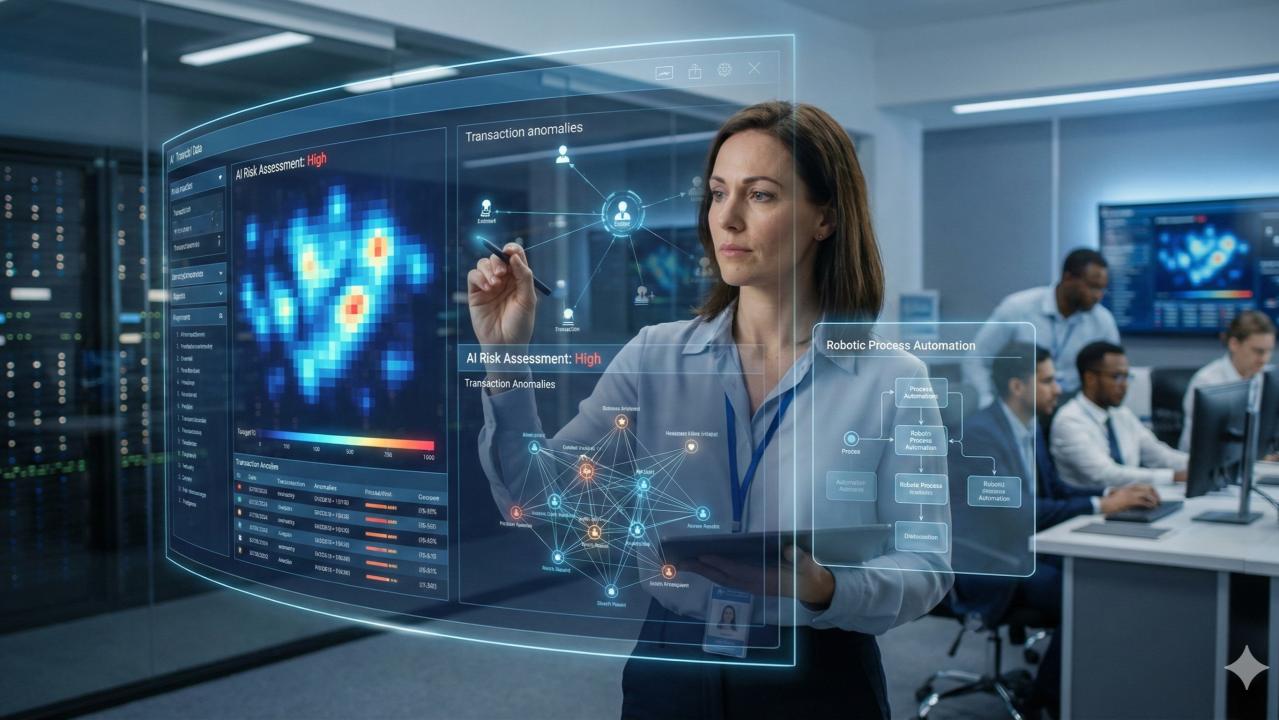
Auditing is undergoing one of the most significant transformations in its history. The traditional image of auditors working primarily with paper files, spreadsheets and physical documents is rapidly being replaced by a more connected, technology-driven approach. Modern auditing combines professional judgment with data analytics, artificial intelligence (AI), cloud computing, automation, cybersecurity and continuous monitoring.
The objective, however, remains the same: to obtain sufficient and appropriate evidence and provide reliable assurance. What has changed is how auditors obtain, analyze and evaluate that evidence.
Recent professional guidance and industry developments show that data analytics is becoming increasingly integrated into audit workflows, while AI is moving from isolated automation toward more connected audit processes.
1. From Traditional Auditing to Modern Auditing
Traditional audits often relied heavily on:
- Physical documents
- Manual testing
- Sample-based procedures
- Excel spreadsheets
- Manual reconciliations
- Periodic audits
- Physical meetings and site visits
- Manually prepared working papers
Modern auditing increasingly uses:
- Cloud audit platforms
- Data analytics
- Artificial intelligence
- Robotic process automation
- Electronic audit evidence
- Digital working papers
- Automated reconciliations
- Continuous auditing
- Cybersecurity assessments
- Real-time dashboards
The difference can be summarized as:
Traditional audit
Financial statements → sample transactions → manual testing → audit report
Modern audit
Business data → automated extraction → analytics/AI → risk identification → targeted testing → continuous monitoring → audit reporting
This does not mean that technology replaces auditors. Rather, technology allows auditors to spend more time on professional judgment, risk assessment and investigation.
2. Data Analytics in Modern Auditing
6
One of the most important developments in modern auditing is audit data analytics.
Instead of examining only a small sample of transactions, auditors can increasingly analyze large or complete populations of financial data.
For example, an auditor could analyze:
- All sales transactions
- All supplier payments
- All journal entries
- All payroll transactions
- All bank transactions
- All credit notes
- All customer balances
- All expense claims
Analytics can help identify unusual transactions, duplicate payments, unusual journal entries, transactions outside normal working hours and other patterns requiring investigation.
The ICAEW reported in 2026 that analytics is becoming embedded in audit workflows, although data quality and methodology alignment remain important challenges.
Example
Suppose a company has 500,000 purchase transactions.
A traditional approach might select a sample of 100 or 200 transactions.
A modern audit system could analyze the entire population and flag:
1,240 unusual transactions
85 possible duplicate payments
31 transactions above approval limits
17 suppliers with unusual payment patterns
The auditor then investigates the exceptions.
3. Artificial Intelligence in Auditing
8
Artificial intelligence is becoming an increasingly important component of modern audit technology.
AI can assist auditors with tasks such as:
- Document analysis
- Contract review
- Risk identification
- Fraud-risk detection
- Anomaly detection
- Classification of transactions
- Summarization of documents
- Extraction of information from invoices
- Reviewing large volumes of correspondence
- Identifying unusual patterns
ISACA notes that AI can support automation, risk identification, controls testing and continuous auditing.
For example, an AI system could analyze thousands of invoices and identify invoices that:
- Have unusual amounts
- Contain duplicate invoice numbers
- Are issued outside normal patterns
- Have unusual supplier details
- Do not match purchase orders
- Do not agree with goods-received records
The auditor still needs to evaluate the evidence and determine whether an exception represents an actual problem.
4. Continuous Auditing
6
Traditional audits are often performed periodically—for example, annually.
Modern auditing increasingly enables continuous auditing, where systems continuously or frequently evaluate transactions, controls and risks.
The Institute of Internal Auditors describes continuous auditing as using technology to provide ongoing assessments of risks and controls and support continuous assurance to management and the board.
For example:
Traditional approach
January–December transactions → audit next year
Continuous approach
January → automated monitoring
February → automated monitoring
March → automated monitoring
April → automated monitoring
...
December → automated monitoring
If an unusual transaction occurs, the system can generate an alert for investigation.
This can significantly reduce the time between risk occurrence and risk detection.
5. Robotic Process Automation
Robotic Process Automation (RPA) can automate repetitive audit procedures.
For example, a software robot can:
- Download a bank statement.
- Import transactions.
- Compare transactions with the accounting system.
- Identify differences.
- Prepare an exception report.
- Save supporting documentation.
- Notify the auditor.
This allows auditors to spend less time performing repetitive procedures and more time investigating exceptions.
6. Cloud-Based Auditing
6
Cloud technology has also changed the way audit firms operate.
Instead of storing all audit working papers on individual computers, firms can use secure cloud-based audit platforms.
A modern audit platform can provide:
- Client management
- Engagement management
- Audit planning
- Risk assessment
- Working papers
- Evidence management
- Review notes
- Task assignment
- Document approval
- Audit reports
- Audit trails
- Client portals
This is particularly useful for audit firms with multiple partners, managers and audit teams working on different engagements.
7. Cybersecurity and IT Audit
Modern auditors must also understand cybersecurity.
As organizations move their accounting systems and business operations online, new risks emerge.
Auditors may need to consider:
- Password security
- User access controls
- Multi-factor authentication
- Data encryption
- Backup systems
- Cloud security
- Cyberattack risks
- Unauthorized access
- Segregation of duties
- System change management
A modern financial audit therefore increasingly overlaps with IT audit and cybersecurity assurance.
ISACA's updated 2026 IT Audit Framework specifically expands attention to areas including cloud computing, AI/ML, data analytics, continuous assurance and AI governance.
8. Audit Dashboards
Modern audit firms can use dashboards to give management and audit partners a real-time view of an engagement.
A dashboard could display:
Audit AreaStatusRiskCash & BankCompletedLowRevenueIn progressHighPurchasesCompletedMediumPayrollIn progressMediumFixed AssetsNot startedHighTaxCompletedMediumInternal ControlsIn progressHigh
A partner can therefore see the overall status of several audit engagements without waiting for individual team members to prepare separate reports.
9. Modern Fraud Detection
Fraud detection is another area where technology can significantly enhance auditing.
Analytics and AI can identify patterns such as:
- Duplicate payments
- Round-number transactions
- Unusual supplier relationships
- Suspicious journal entries
- Transactions just below approval limits
- Unusual employee expense claims
- Unexpected changes in margins
- Unusual transactions at period-end
However, an exception is not automatically fraud.
The technology identifies transactions requiring attention. The auditor must investigate, obtain evidence and exercise professional skepticism.
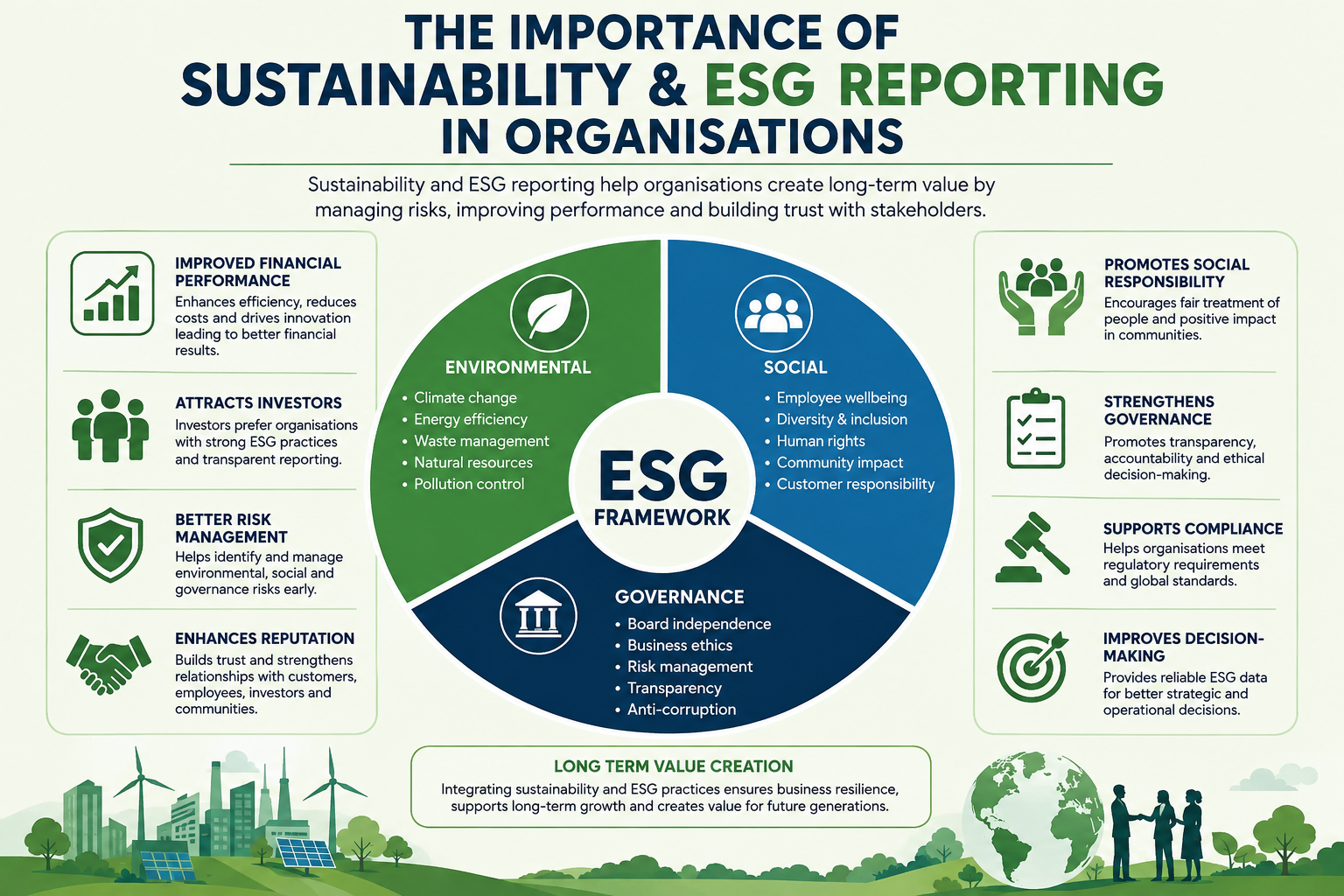
10. ESG and Sustainability Auditing
7
Modern auditing is also expanding beyond traditional financial statements.
Organizations increasingly report information relating to:
- Environmental performance
- Carbon emissions
- Energy consumption
- Employee welfare
- Governance
- Diversity
- Sustainability
- Climate-related risks
This creates demand for ESG and sustainability assurance.
Recent research highlights potential uses of AI in sustainability assurance, including evidence extraction, criteria mapping, anomaly detection, external-data comparison and identifying potential greenwashing.
11. The Human Auditor Remains Essential
Despite rapid technological development, modern auditing is not about replacing auditors with machines.
Technology can process enormous amounts of information, but auditors must still answer important questions:
Is the evidence reliable?
What does the exception actually mean?
Is management's explanation reasonable?
Is there sufficient appropriate audit evidence?
Has fraud occurred?
Is the financial statement fairly presented?
What conclusion should be reached?
Professional skepticism, ethical judgment and accountability remain essential. Current audit-technology guidance emphasizes that human oversight and professional judgment must remain central even as AI and automation become more capable.
12. Skills Required by the Modern Auditor
The auditor of the future needs more than traditional accounting knowledge.
Important skills include:
Accounting
Understanding financial reporting and accounting principles.
Auditing
Understanding audit methodology, evidence, risk and controls.
Data analytics
Ability to work with large datasets and identify patterns.
Technology
Understanding accounting systems, cloud systems and digital workflows.
Cybersecurity
Understanding technology-related risks and controls.
Artificial intelligence
Understanding how AI tools work, their limitations and their risks.
Communication
Ability to explain complex findings to management and boards.
Professional skepticism
The ability to critically evaluate evidence rather than simply accepting automated results.
13. The Modern Audit Workflow
A modern audit engagement can be structured as follows:
Client data
⬇️
Secure digital data collection
⬇️
Automated data validation
⬇️
Risk assessment
⬇️
Data analytics & AI
⬇️
Exception identification
⬇️
Auditor investigation
⬇️
Evidence & working papers
⬇️
Manager/Partner review
⬇️
Audit report
⬇️
Continuous monitoring & follow-up
This represents a shift from a largely document-driven audit to a data-driven, risk-focused and technology-enabled audit.
14. Benefits of Modern Auditing
Modern auditing can provide several advantages:
1. Greater audit coverage
Large populations of transactions can be analyzed.
2. Faster audits
Automation can reduce repetitive manual procedures.
3. Better risk identification
Analytics can highlight unusual patterns.
4. Improved fraud detection
Technology can identify transactions requiring investigation.
5. Real-time information
Continuous monitoring can provide faster alerts.
6. Better collaboration
Cloud platforms allow audit teams to work together.
7. Improved audit documentation
Digital workflows can create stronger audit trails.
8. More valuable audit services
Auditors can provide management with insights rather than simply reporting historical errors.
15. Challenges of Modern Auditing
Technology also introduces new challenges.
These include:
- Poor-quality client data
- Cybersecurity risks
- Privacy concerns
- AI hallucinations or incorrect outputs
- Algorithmic bias
- Lack of skilled personnel
- High implementation costs
- Dependence on technology
- Difficulty validating automated results
- Regulatory uncertainty
Therefore, technology should be implemented within a strong framework of governance, professional standards, ethics and human oversight.
Conclusion
Modern auditing is no longer simply about checking accounting records. It is becoming a technology-enabled assurance profession.
The modern auditor combines accounting knowledge, auditing standards, data analytics, artificial intelligence, automation, cybersecurity and professional judgment to provide better assurance.
The future of auditing is likely to move increasingly toward:
AI + Data Analytics + Automation + Continuous Monitoring + Human Professional Judgment
The most successful audit firms will therefore not be those that merely purchase the most expensive technology. They will be those that integrate technology into a strong audit methodology while maintaining independence, professional skepticism, confidentiality, ethical behavior and audit quality.